Miami Exterior Painters Who Excel Under the Sun
EXTERIOR PAINTERS IN MIAMI THAT TRIUMPH OVER HEAT & HUMIDITY
Exterior paint in South Florida is fighting three things at once: UV exposure that breaks down pigment and binder, humidity that slows dry time and invites mildew, and salt-laden air that works into cracks and seams faster than in drier climates. Get any one of those wrong in the product or prep, and chalking, peeling, or fading shows up years before it should. Our comprehensive services include:
- High-pressure washing and surface preparation
- Exterior brick and masonry painting
- Deck staining and waterproofing
- Fence and railing restoration
- Garage and storage building painting
- Stucco and concrete coating
- Exterior door and trim detailing
Pressure washing comes before any of it - removing chalk residue, mildew spores, and loose paint so the new coat actually bonds to the surface instead of sitting on top of what's failing underneath.
What We Commonly See During Exterior Estimates
Most exterior walkthroughs turn up a similar handful of issues, in different combinations depending on the property's age, sun exposure, and distance from the water:
- Hairline stucco cracking, usually along window corners and where additions meet original construction
- Caulking that has shrunk, cracked, or pulled away at trim, window, and door edges
- Chalking - a powdery residue on older paint that signals the resin has broken down under UV exposure
- Mildew staining on shaded, north-facing, or heavily landscaped walls
- Oxidized or rust-stained metal on railings, gates, and fasteners
- Moisture intrusion at rooflines, downspout paths, and grade-level stucco
- Previous coatings that are peeling or delaminating from a substrate they were never suited to
Which of these show up - and how much repair they need - is what actually drives a price, more than the square footage on its own.
Elastomeric vs. Acrylic: How We Decide
For most stucco homes in Miami and Fort Lauderdale, a 100% acrylic exterior coating is the right call - it holds color well under prolonged UV exposure and performs well in high humidity without adding unnecessary cost. We typically move to an elastomeric coating instead when the stucco already shows multiple hairline cracks or has a history of recurring cracking in the same spots, since elastomeric coatings can bridge that movement in a way a standard acrylic can't. Elastomeric isn't automatically the "better" choice for every stucco home - it costs more, needs a thicker application to work correctly, and isn't necessary on a substrate that isn't cracking.
No coating, however, compensates for prep work that was skipped. A premium paint applied over chalking residue, unsealed cracks, or a previous coat that's already delaminating will fail early regardless of what's in the can. That's why the walkthrough happens before the product conversation, not after.
When a Full Repaint May Not Be Necessary
Not every exterior that looks tired needs a complete repaint. A home with an otherwise sound coating that's showing isolated mildew staining, a few cracked caulk joints, or fading on just the sun-facing elevation can sometimes be addressed with spot repairs, a wash, and a caulk refresh rather than a full-property job. We'll tell you when that's a realistic option rather than defaulting to the larger scope - a repaint that isn't needed yet is money better spent on the prep work that actually extends the life of what's already on the walls.
Curious about house painting cost in Miami? Our blog breaks down 2026 pricing and what affects your estimate. Wondering the best time to paint a house in Florida? We cover that too.
EXTERIOR HOME AREAS WE TRANSFORM
Home Exterior Walls
Painting & Protective Coating
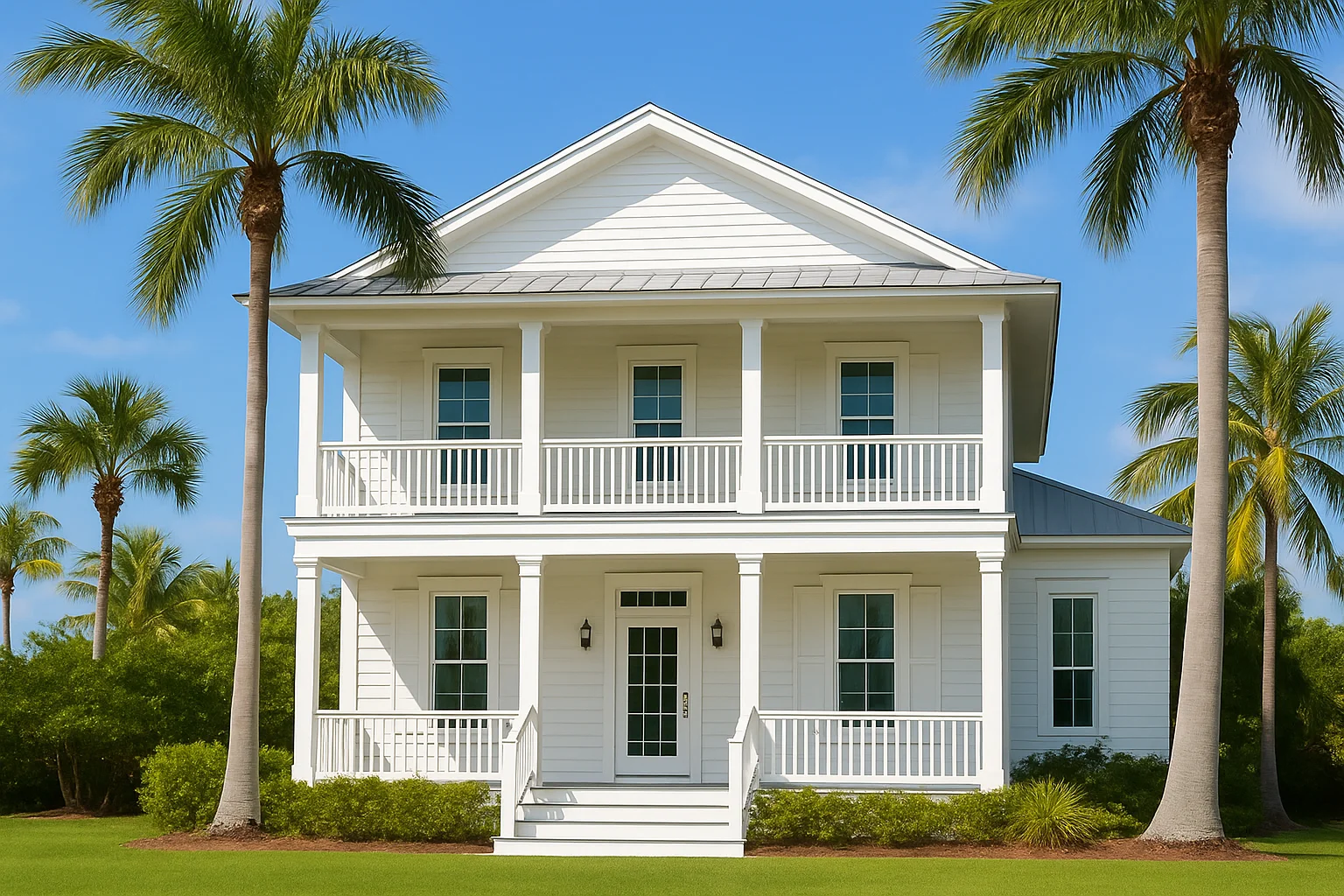
South-and west-facing walls take the brunt of UV exposure and chalk first; north-facing and shaded walls stay damp longer and are where mildew tends to show up. We match the coating to which problem a given wall actually faces rather than applying the same product uniformly across a home with stucco, siding, or masonry surfaces.
Outdoor Decks & Patios
Staining & Waterproofing
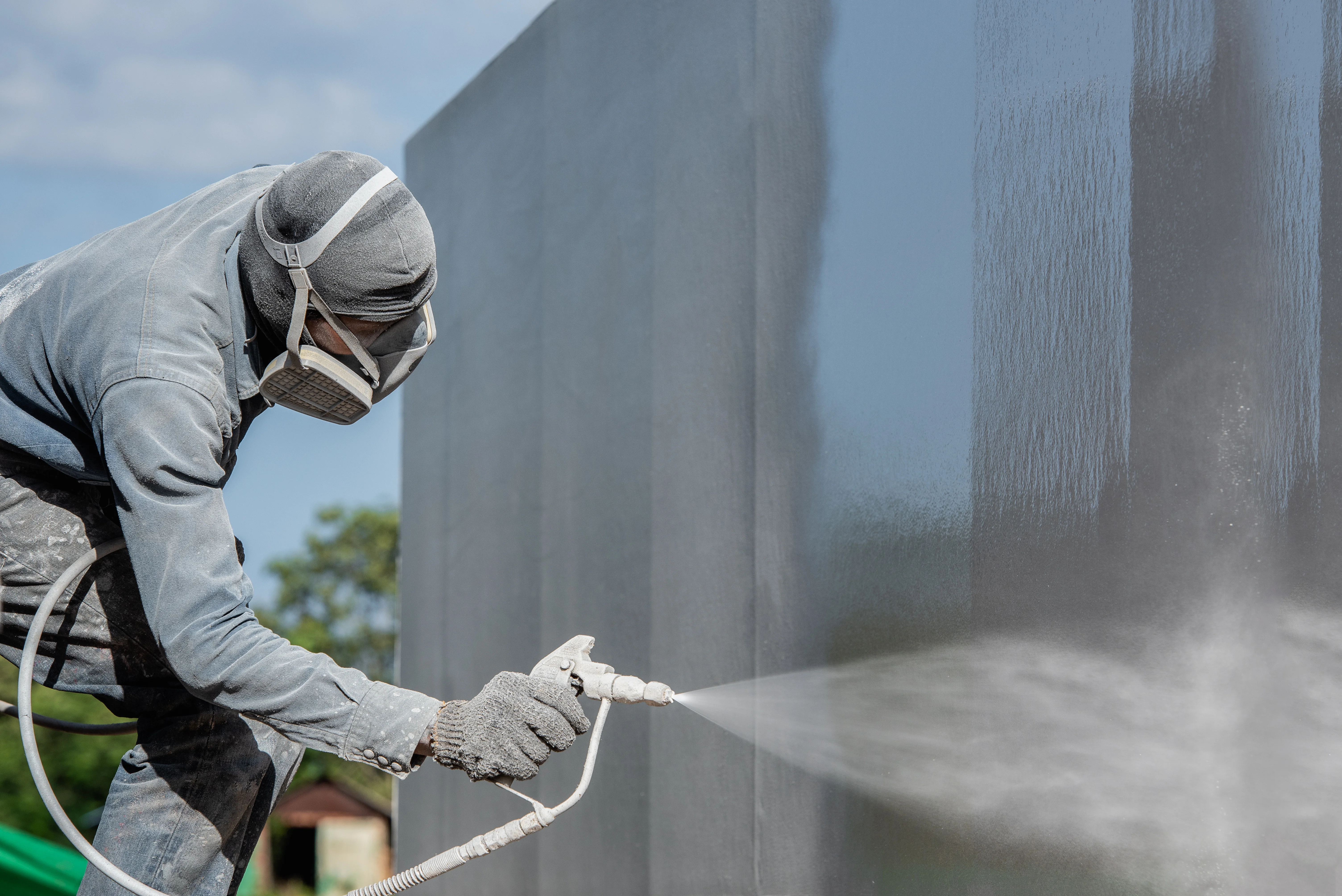
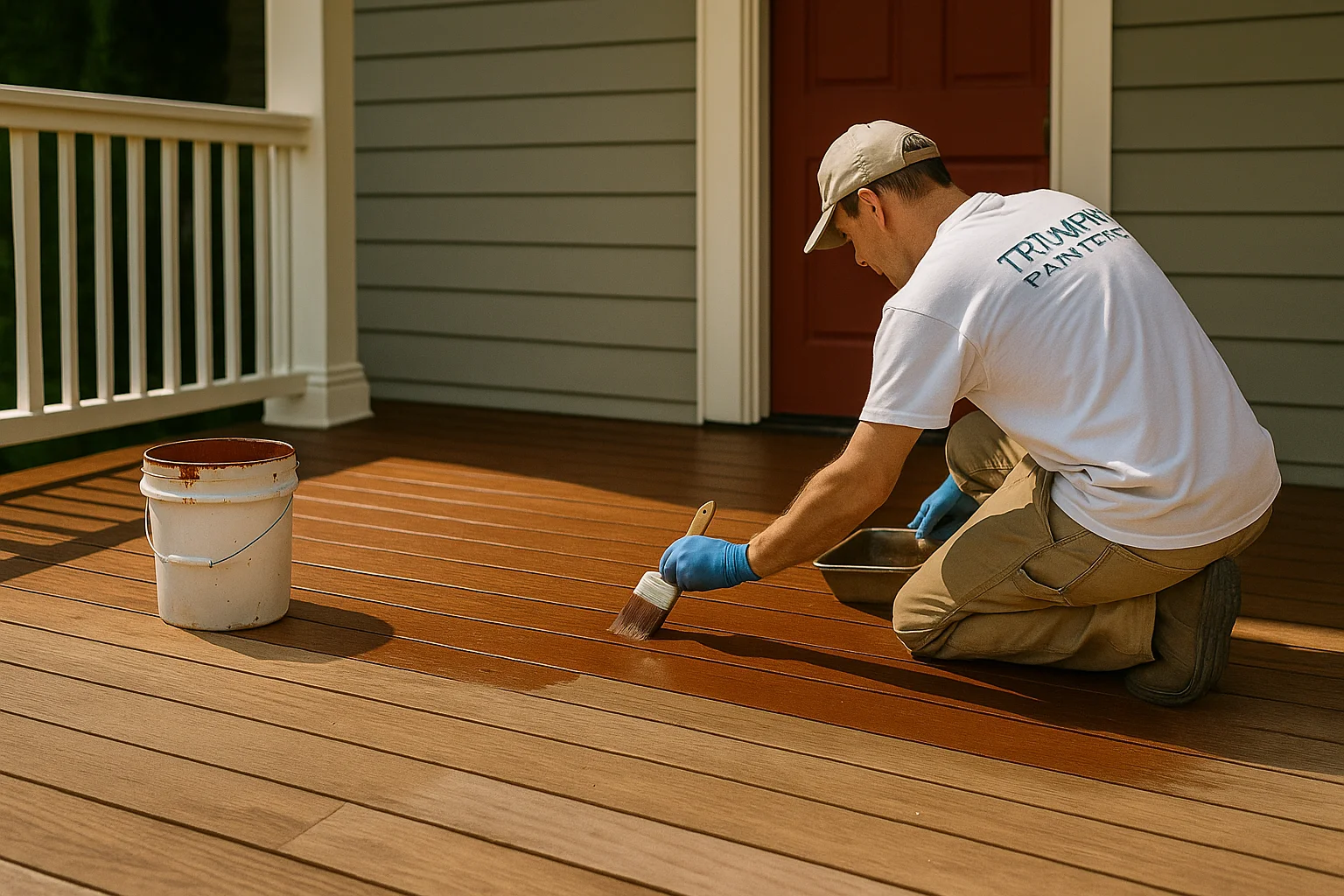
Florida's year-round outdoor living demands durable deck finishes that can withstand constant moisture and sun exposure. Our deck staining services use marine-grade products that resist mold, mildew, and UV damage. We ensure maximum adhesion and longevity in South Florida's challenging climate.
Fences & Privacy Screens
Painting & Restoration
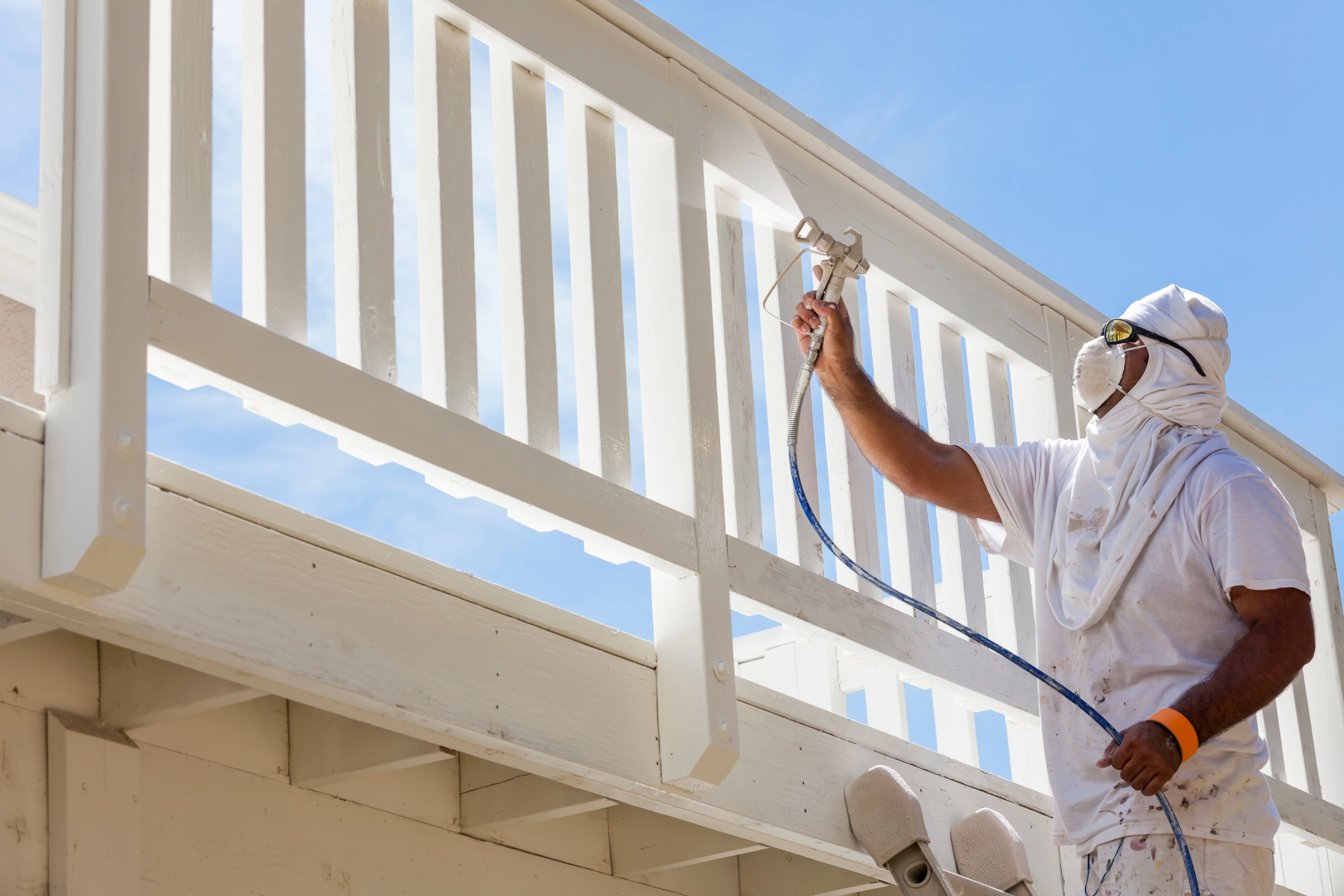
Fences sit low to the ground, catching sprinkler overspray and yard moisture on top of normal rainfall, which is why wood and metal fencing here tends to show rot and rust sooner than the same materials would inland. We power wash and treat for that ground-level moisture before coating, rather than just painting over it.
Pool Deck
Pool Deck Painting
Pool decks deal with standing water, pool chemicals, and bare feet on hot concrete all at once, which rules out a standard exterior paint. We use coatings formulated for chemical exposure and slip resistance, since a finish that looks fine on day one but turns slick within a season isn't actually doing the job.
Exterior Door
Painting, Staining, Trim & Casings
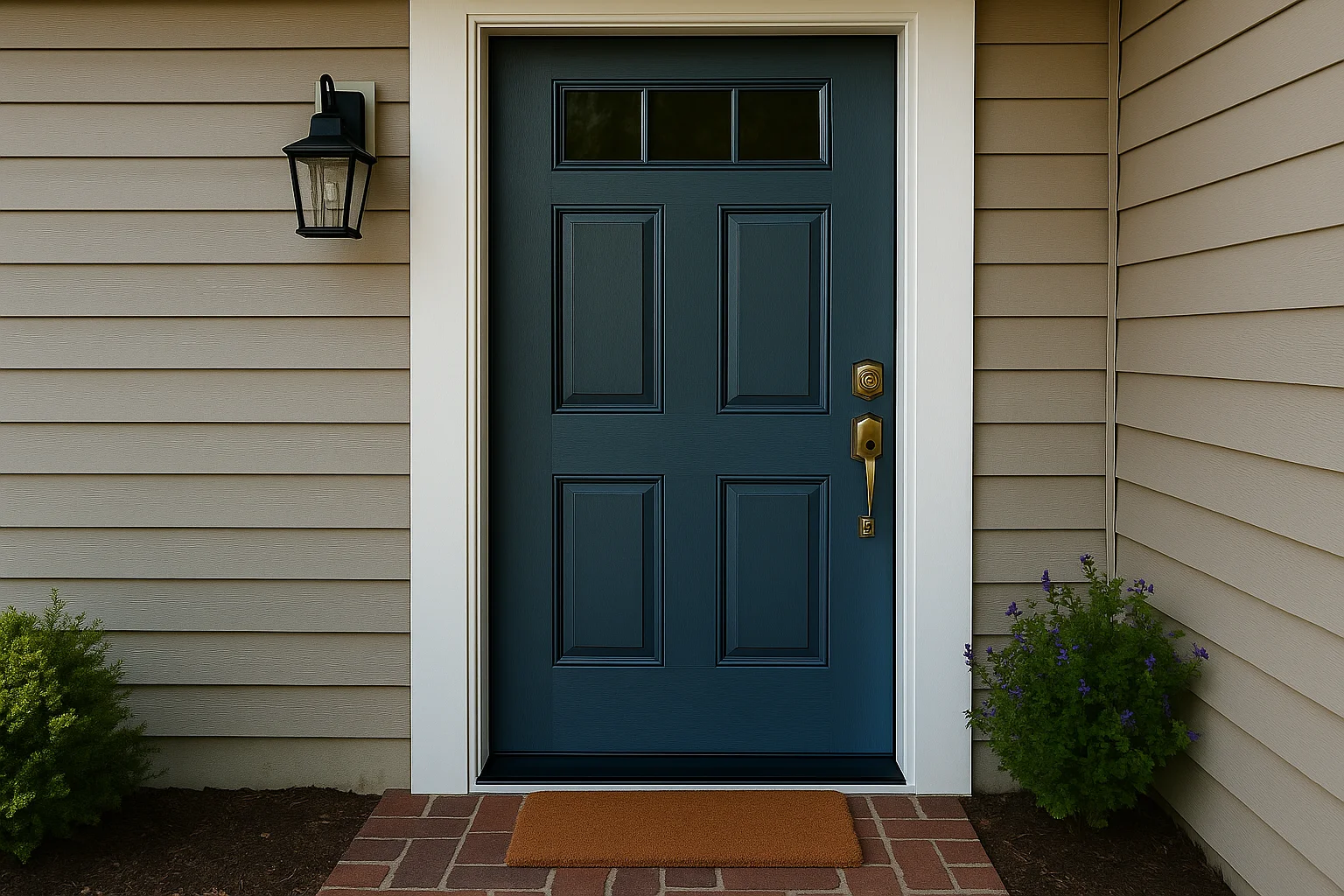
There can be many different considerations when painting exterior doors, depending on how they are constructed and what the rest of your home exterior looks like. For example, should you paint or stain a door? What colour should you paint or stain it? How will the way its trim and window casings are positioned affect how you have to paint it? Triumph Painters can answer these questions for you.
Garage Door
Painting, Staining, Trim & Casings
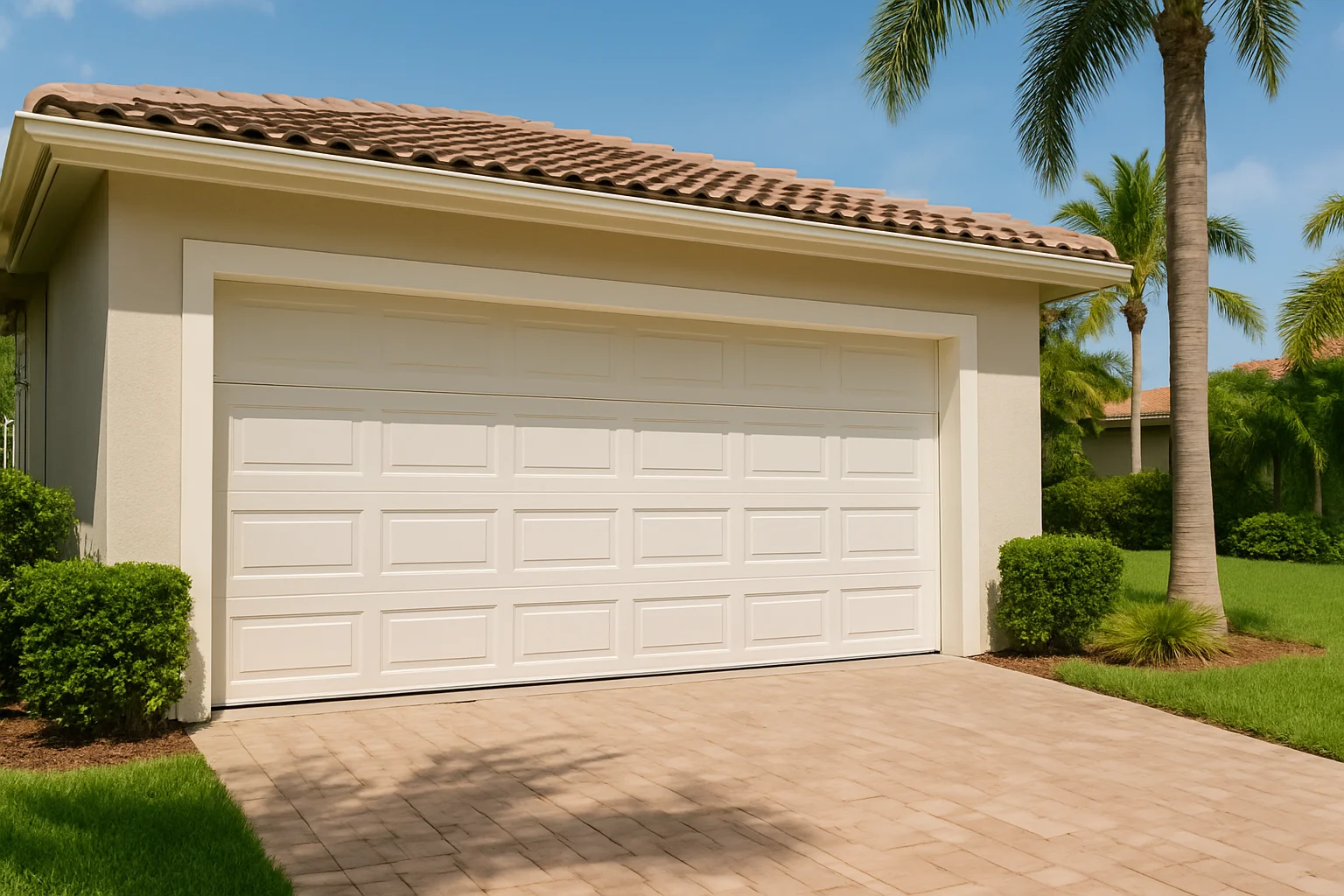
Your garage door is part of your home's exterior, too, so it should receive some attention when painting. However, it can be a challenge to paint if it has fine details in the surface, trim, and window casings. Plus, you have to match a type of paint to the door's material. Let our painting team take care of these complications and ensure your garage door gets painted correctly the first time.
EXTERIOR SURFACE TYPES WE MASTER
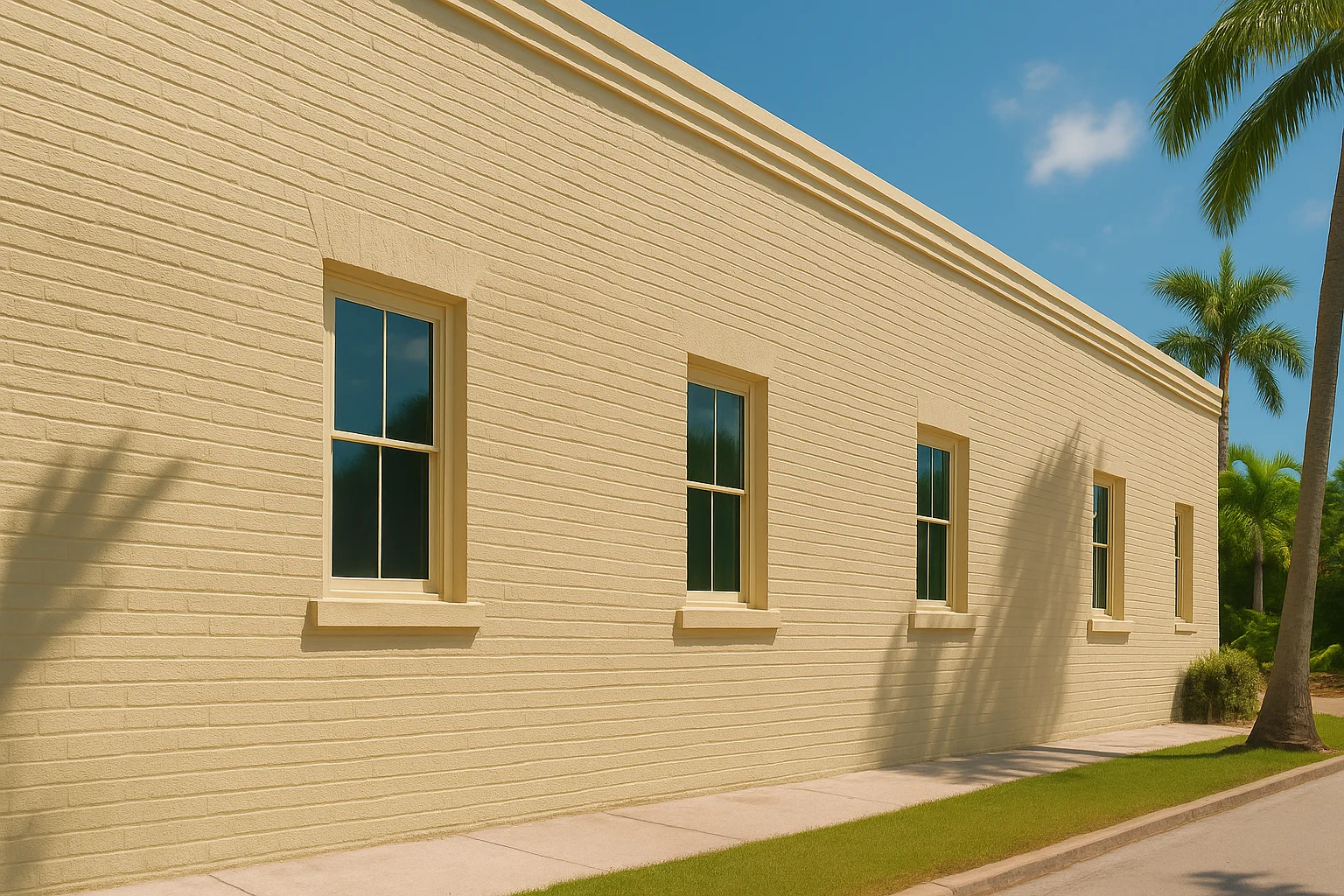
Brick & Masonry
Brick and masonry need to breathe - a sealed, non-porous coating traps moisture behind it, which leads to spalling and peeling as trapped water tries to escape. We use vapor-permeable coatings that let masonry release humidity instead of holding onto it.
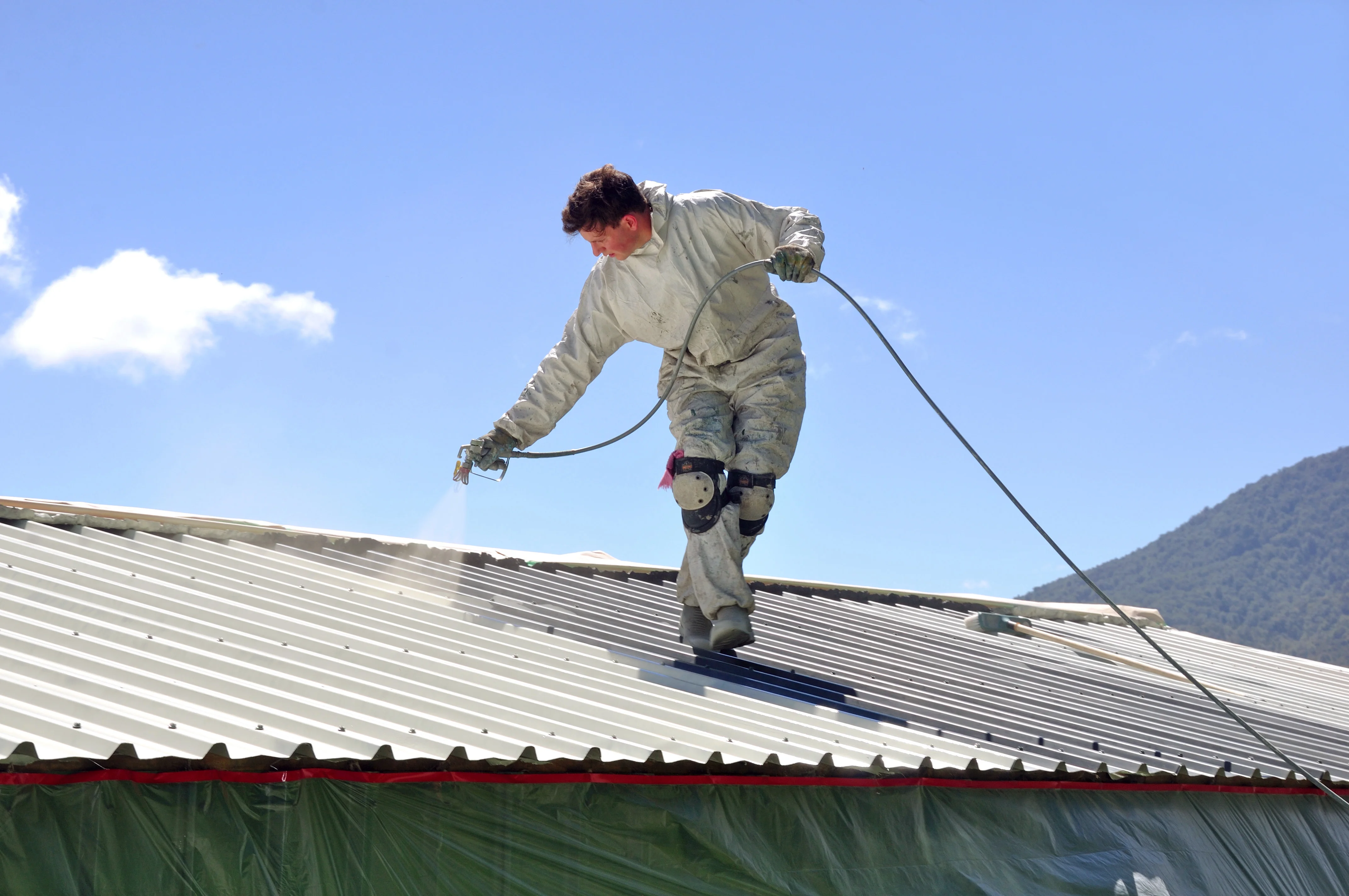
Steel and Aluminum Surfaces
Bare metal corrodes fast once salt air gets to it, so metal surfaces get a rust-inhibiting primer before any topcoat. Skipping that step is why a metal railing or gate often shows rust bleed-through within a year of a standard repaint.
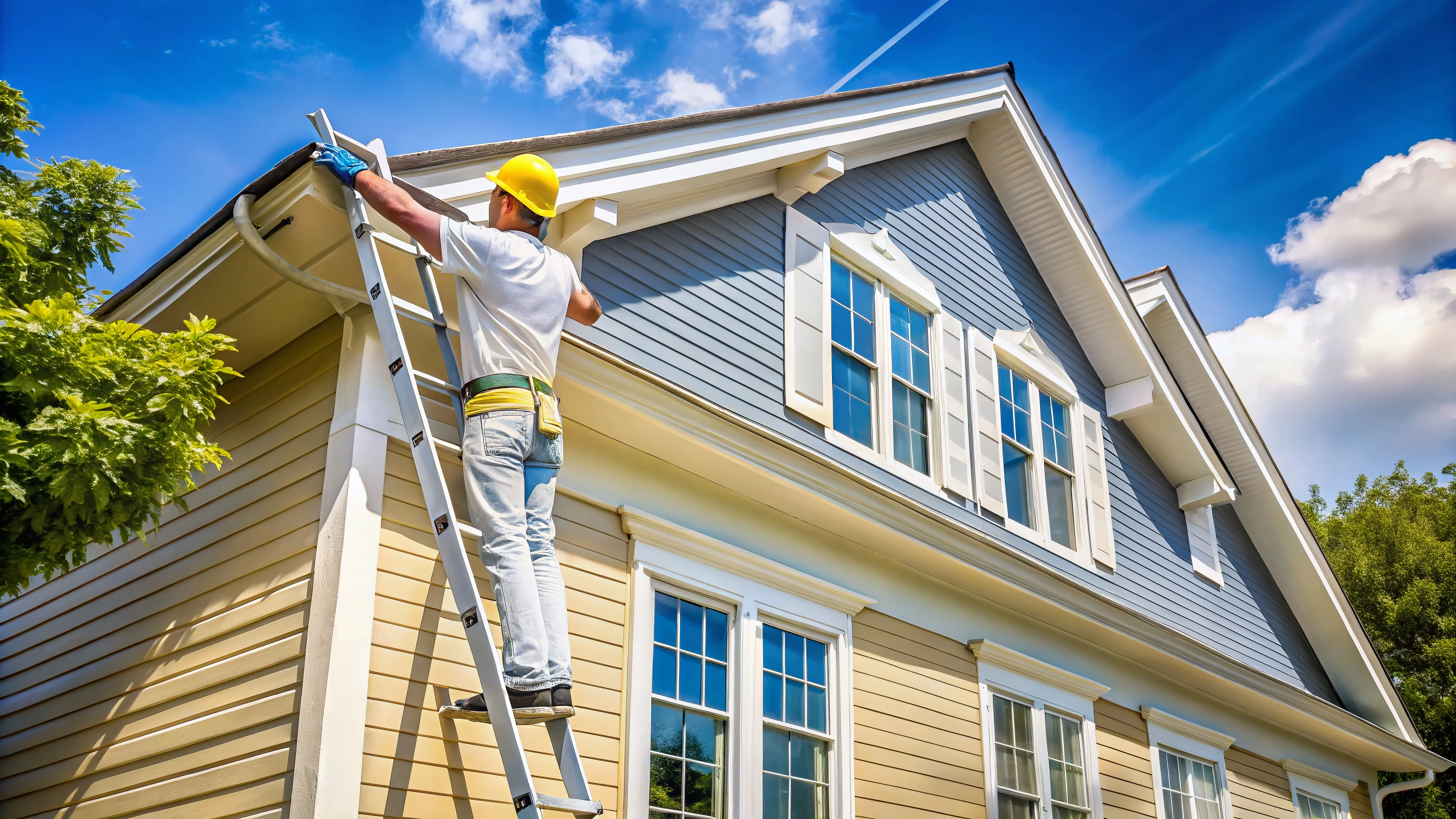
Vinyl Siding
We use flexible, light-colored paints that prevent warping and provide excellent adhesion and color stability in Florida's challenging climate.
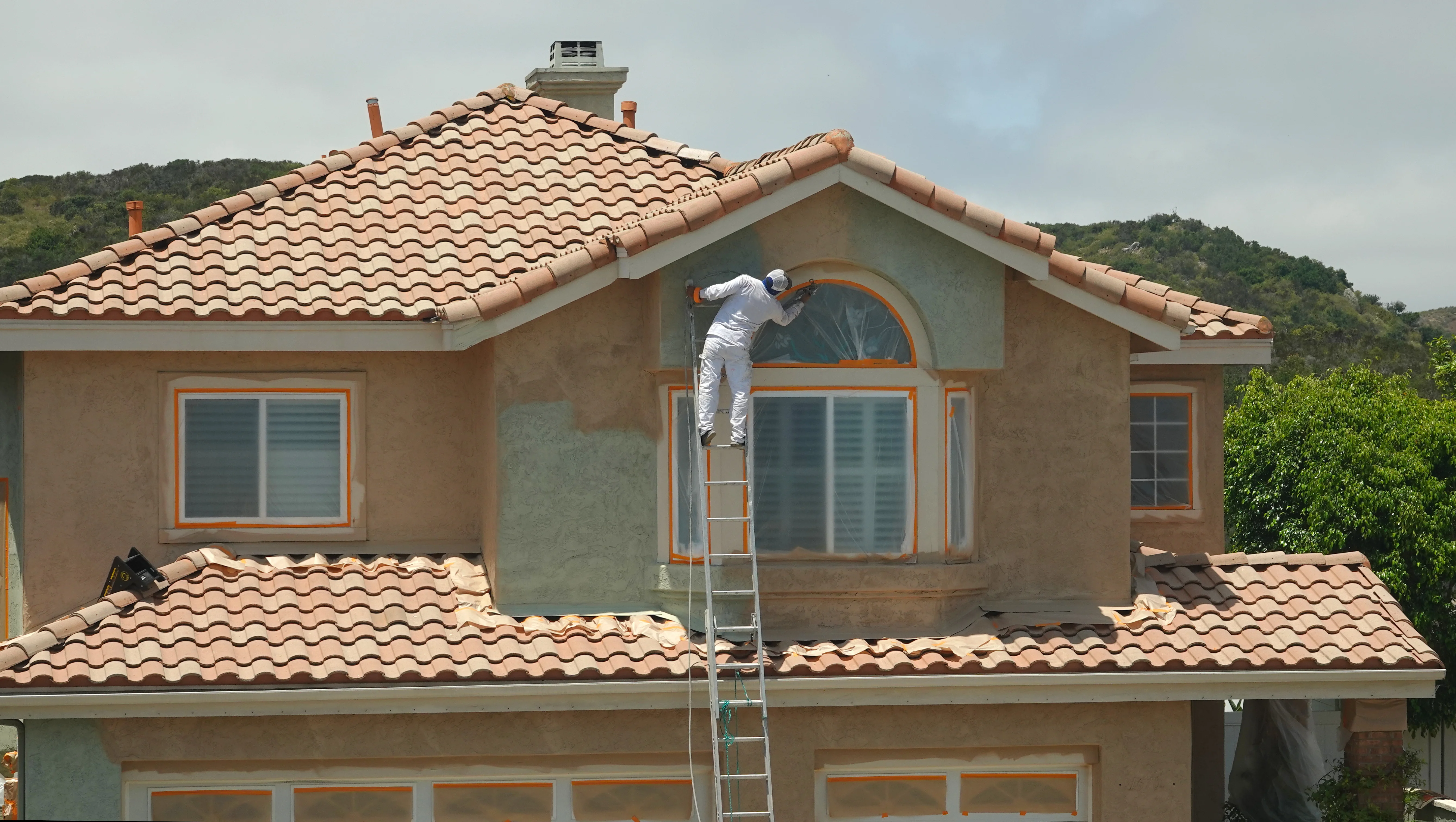
Windows & Frames
Our detailed approach ensures proper masking, primer selection, and paint application for smooth operation and weather protection.
Exterior Wood
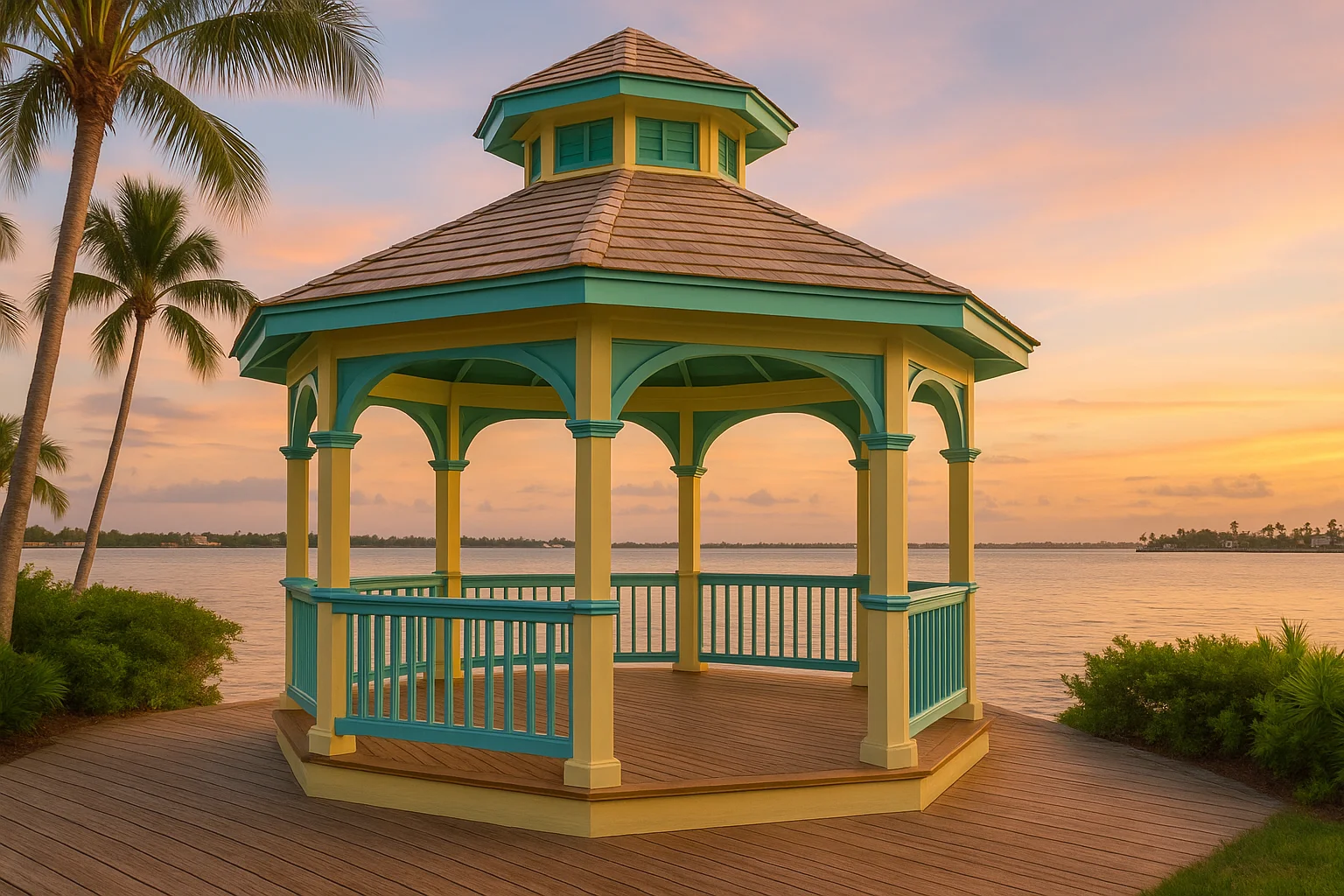
Humidity swells wood and then dries it back out on a cycle that eventually cracks a rigid coating. We let wood surfaces dry fully after washing and use products with enough flexibility to move with the wood instead of splitting at the grain.
Stucco & Concrete
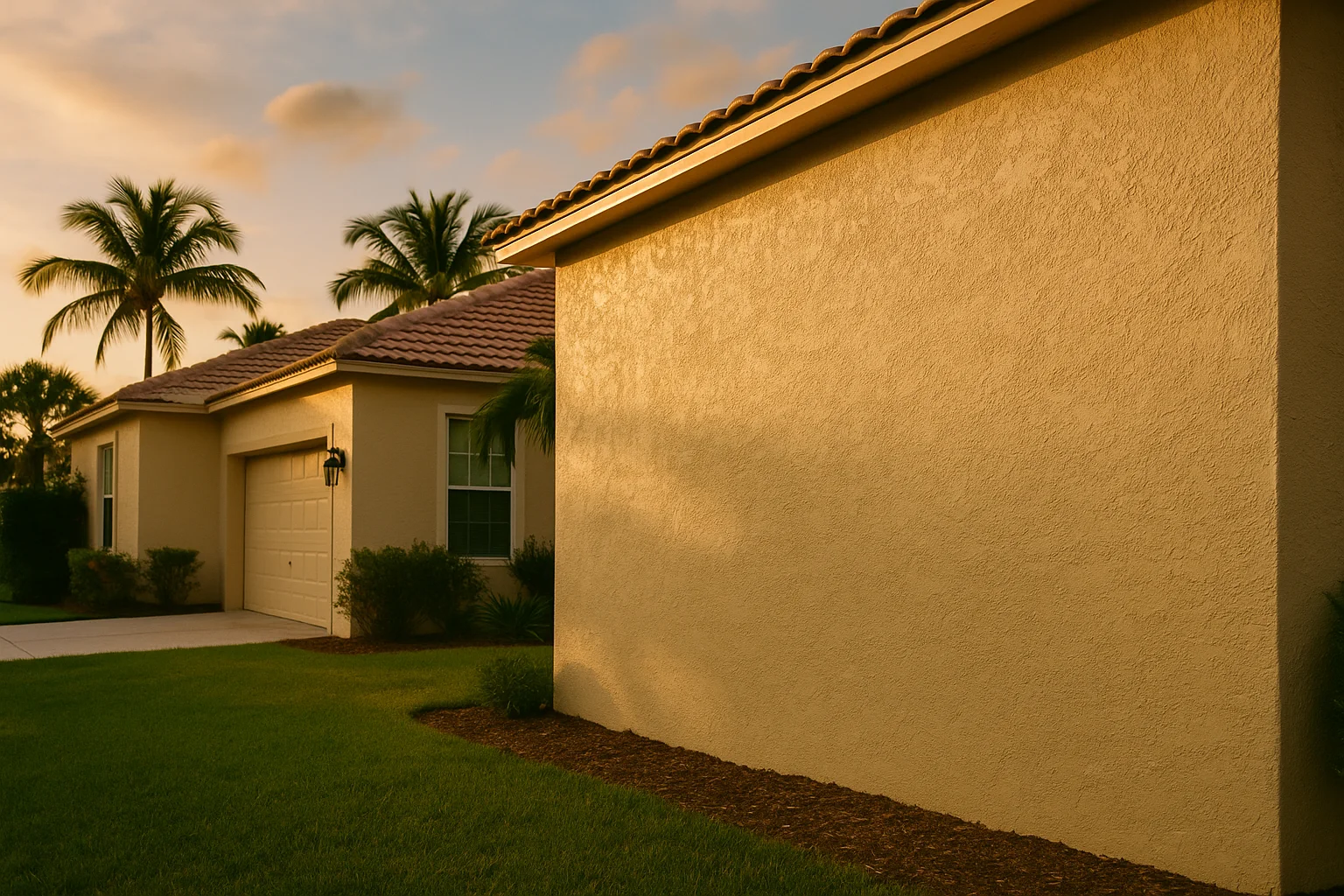
Stucco develops hairline cracks as temperature and humidity shift through the day, and painting over them without repair just means the crack reappears through the new coat. We fill cracks first, then apply elastomeric coatings built to flex with that movement instead of fighting it.
HOW TO CHOOSE AN EXTERIOR PAINTER IN MIAMI
Fully Insured Painting Contractor
South Florida Climate Expertise
Transparent & Detailed Pricing
WHY CHOOSE TRIUMPH PAINTERS FOR MIAMI EXTERIOR PAINTING?
Fully Insured Painting Contractor
Ladder and lift work on a two-story home carries real risk, which is why our liability coverage is sized for exterior work specifically, not just a baseline policy. Documentation is available before the crew sets foot on your property.
Miami Exterior Specialists
We choose primer and topcoat combinations based on which side of the house faces the sun, how close the property sits to salt water, and what the existing coating is already doing wrong, rather than applying one product to every wall.
Fair & Honest Pricing
We walk the exterior first and note what condition each surface is actually in - existing coating, crack severity, substrate type - and price prep work as its own line item instead of folding it into a flat rate that doesn't reflect what your specific walls need.
Outstanding Track Record
Since establishing Triumph Painters in Miami, we've built an exceptional reputation serving homeowners throughout South Florida with prestigious residential and commercial projects.
Areas We Serve
Based in Sunny Isles Beach, we serve the full span of Miami-Dade and Broward counties - from Fort Lauderdale and Hollywood in the north through Aventura and Miami, down to Richmond Heights, South Miami Heights and Cutler Bay in south Miami-Dade.
EXTERIOR HOUSE PAINTING PROCESS
There are 5 stages to painting home exteriors:
Cleaning Surfaces to Paint
The first step is to clean off the surfaces that you plan on painting. This gets rid of dirt, mildew, pollen, loose paint, and other contaminants that could affect how well the paint sticks and how smooth the finish looks. Note that if you are cleaning off an absorbent material, such as wood, you may have to wait a bit longer for it to dry before you can move on to the next step.
Other Surface Preparation
In some cases, extra preparatory work is needed before painting can begin. This can include repairing or replacing damaged materials, stripping previous paint coat, caulking trim, and putting primer on surfaces to be painted. It can also include putting out protective equipment to keep paint or stain from getting on things it is not supposed to.
Painting the Exterior
As long as the exterior walls of your home are not overly detailed, they can often be spray painted in order to save time. Some houses, however, may need more intensive painting by hand if walls are made of certain materials or have certain designs.
Painting the Trim
Trim painting methods vary based on the size of the property and the amount of trim present. Hand painting is ideal for smaller homes where detail and precision matter most. For larger homes with extensive trim, spray painting allows for faster application and a smooth, uniform finish.
Touch-Ups and Clean-Up
Once painting or staining is complete, our team performs a final walkthrough to address any minor touch-ups and ensure a flawless finish. All tools, materials, and work areas are thoroughly cleaned, leaving the property neat, orderly, and ready to enjoy.
MIAMI EXTERIOR PAINTING FAQS
What are typical exterior painting rates for homes in Miami?
On average, exterior painting rates in Miami range from $5-$10 per square foot. These can depend on the overall size of a house, how much of the exterior is being painted, what materials the exterior is made of and what condition they are in, what equipment the painters need to use, and any other labour and regulatory costs involved.
The cost to completely paint the exterior of an average house in Miami starts at about $4,000-$5,000. This baseline goes up if you have a bigger house, and goes down if you are only painting certain parts of the exterior.
For example, if you are only painting window trim, it will cost you about $80-$250 per window. This is based on the complexity, size, and material types of each window, as well as what kind of paint is used. Using the same variables, painting a front door can cost between $150 and $600, and painting a garage door can cost between $400 and $1000.
Are Triumph Painters insured for exterior house painting jobs?
Of course. Every member of our painting team is fully insured in Florida and committed to staying safe while painting, whether that is outdoors or indoors. We also back all of our projects with comprehensive liability insurance, so you are taken care of in case of accidental property damage.
How long does exterior home painting take?
Painting the entire exterior of an average house takes around 2-4 days, but this can vary drastically depending on how much prep work is needed. If little prep work is needed, a small house can be painted in as few as 1 or 2 days. However, a larger home needing extensive cleaning and repairs can take a week or two to paint.
Some exterior paint jobs take less time than others, depending on which elements of your home exterior you are painting and the complexities of those jobs. For example, painting trim is a more detail-intensive process that can take 2 to 3 days, while just spray-painting siding can take as few as 2 days.
What is the ideal temperature range for exterior painting?
A good temperature range for exterior painting is between 50°F and 86°F (10°C and 30°C). If you paint in cooler weather, paint takes longer to dry as it retains moisture longer. This not only extends your painting time, but also increases the risk that your paint will blister, peel, crack, discolour, or trap debris.
On the other hand, if you paint in hotter weather (or in direct sunlight), your paint can dry too quickly. This can also cause blistering, chipping, and cracking as the paint does not have a chance to properly adhere to the surface you are painting. It can also cause your paintbrushes and rollers to harden as the paint on them dries prematurely. In Florida climate, we schedule painting during optimal weather windows to ensure the best results.
How do I prepare a house for exterior painting?
Painting the exterior of your home can go faster (and perhaps be less expensive) if you take a number of preparatory steps beforehand. Here are some basic steps for how to prepare a house for exterior painting:
- Clear the work area
- Relocate plants and landscaping
- Remove temporary structures and accessories
- Secure doors, windows, and outdoor fixtures
- Provide clear access around the home
- Notify us of special concerns
What are the right tools needed for exterior home painting?
Some key tools when painting outdoors include:
- Ladder - Home exteriors often include high, out-of-the-way places that are difficult to reach, let alone paint. Make sure you have a tall enough ladder to be able to see all the areas you want to paint. Using too small a ladder is dangerous, as it can cause you to lose your balance if you are reaching to try and paint certain areas. Reaching like this can also leave uneven finishes in the places you are trying to paint.
- Pressure washer - This is an essential tool for cleaning off your exterior surfaces before you paint them. The pressurized flow will help you clean even hard-to-reach areas with enough force to remove any contaminants.
- Surface prep tools - Basically, this covers anything you might need to clean or repair the surfaces you are going to paint after you have washed them. Examples include wire brushes, putty knives, sanders, scrapers, and multi-purpose tools.
- Caulk gun - You will need this to seal the seams around places like windows, doors where paint could accidentally leak into your home interior.
- Drop cloths - Use these to protect surfaces and objects (such as your garden plants) that you do not want to get paint or stain on.
- Tape - You can use tape to protect certain surfaces you do not want to get paint on, secure objects that might get in the way of your painting, and more.
- Paintbrush, roller, and sprayer - Use whichever tool is appropriate for the size and complexity of the surface you are painting.
Can I not just DIY my exterior house paint job?
Yes, but you will have a lot to think about if you go that route. There are a lot of reasons you might not want to take on this job yourself, including:
- You have to know all the different materials your home exterior is made of, and what paints/stains and tools will work best on them.
- You have to consider how the climate where you live (like if it is frequently hot or rainy) will affect when you can paint and what your paint job will have to stand up to. Florida intense sun, humidity, and salt air require specialized knowledge.
- House exteriors have many high-up, difficult-to-reach places, so you will have to invest in the proper equipment to paint these areas safely. This can also be incredibly dangerous if you are not used to being on a ladder to paint.
- Can you invest the time to actually complete the job? You need to complete parts of the job in batches; you cannot paint half a wall and then call it a day, or your work will look uneven.
- You have to buy all the materials yourself, and be able to accurately calculate how much paint you need so you do not overspend. This is difficult without outdoor painting experience.