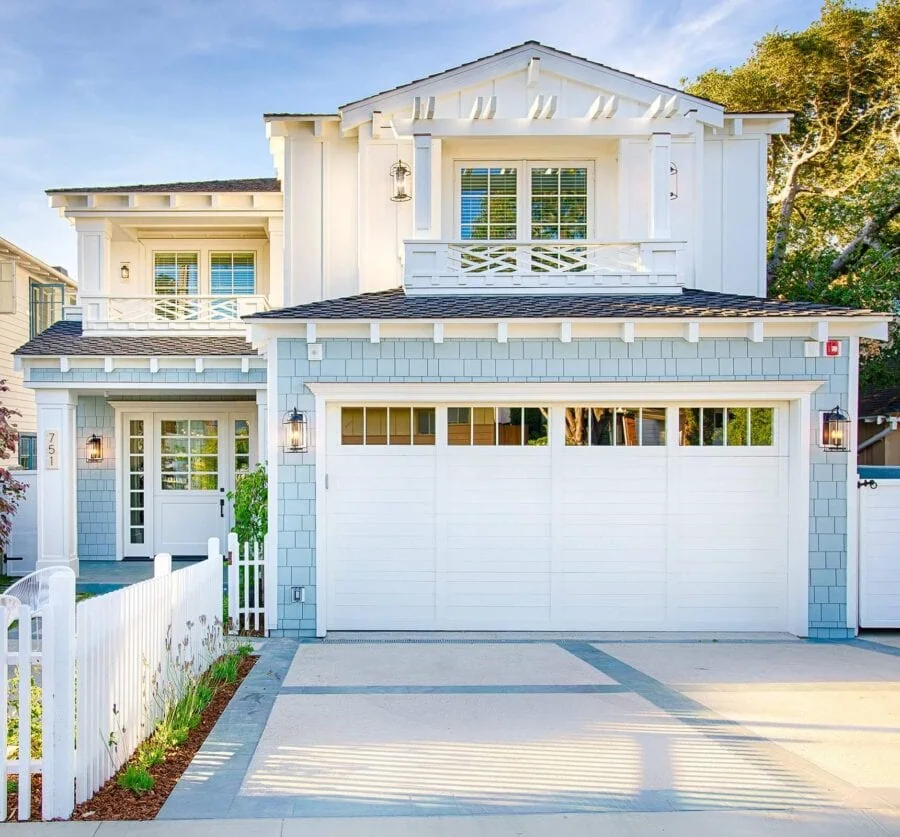
Painters Near Me in Richmond Heights, FL
Richmond Heights is a postwar planned neighborhood in southwest Miami-Dade, and it paints nothing like the coast. Sitting roughly fifteen miles inland, houses here are spared the constant salt-laden air that drives coating choices on the barrier islands. What they get instead is unfiltered sun, heavy afternoon storms through the wet season, and a housing stock that is now sixty to seventy years old. Those are different problems, and they call for a different specification.
We handle residential painting, exterior painting, interior painting, and commercial painting throughout Richmond Heights - single-family homes on the residential blocks, plus the retail, offices, churches, and schools along the surrounding corridors.
Richmond Heights Areas We Serve
We also paint nearby: Sunny Isles Beach, Fort Lauderdale and South Miami Heights.
Homes & Buildings We Paint in Richmond Heights
Single-Story CBS Block Homes
The neighborhood standard: concrete block and stucco houses from the 1950s and 1960s, most of them one story with carports, awnings, and jalousie or replacement windows that all need masking and cutting in by hand.
Storm-Repaired & Remodeled Houses
South Miami-Dade took the worst of Hurricane Andrew, and many homes here carry repaired or replaced sections. Different substrate ages absorb paint differently, so those walls need spot priming before a topcoat goes on.
Neighborhood Retail & Offices
Strip retail, small offices, and multi-tenant buildings along Coral Reef Drive and the US-1 corridor, repainted on evening or weekend phases so tenants keep trading.
Churches, Schools & Community Buildings
Congregation and institutional buildings where work has to fit around services, school terms, and community use - and where a repaint is often a long-deferred capital item that needs an honest scope.
What Inland South Miami-Dade Does to Paint
Unbroken sun on south and west walls - without the sea breeze and building shadow you get closer to the coast, south and west elevations here bake all afternoon. Those are the walls that chalk and fade first, often years before the shaded sides show anything at all.
Wet-season downpours, not salt spray - the summer pattern of heavy afternoon storms means substrates stay wetter for longer than the forecast suggests. Painting stucco that is still holding moisture is the single most common cause of blistering we see on inland repaints.
Mature tree canopy - the shade is welcome, but shaded walls dry slowly and grow mildew. Overhanging limbs also abrade a finish where they touch, and leaf litter against a wall base traps moisture at exactly the point where it does most harm.
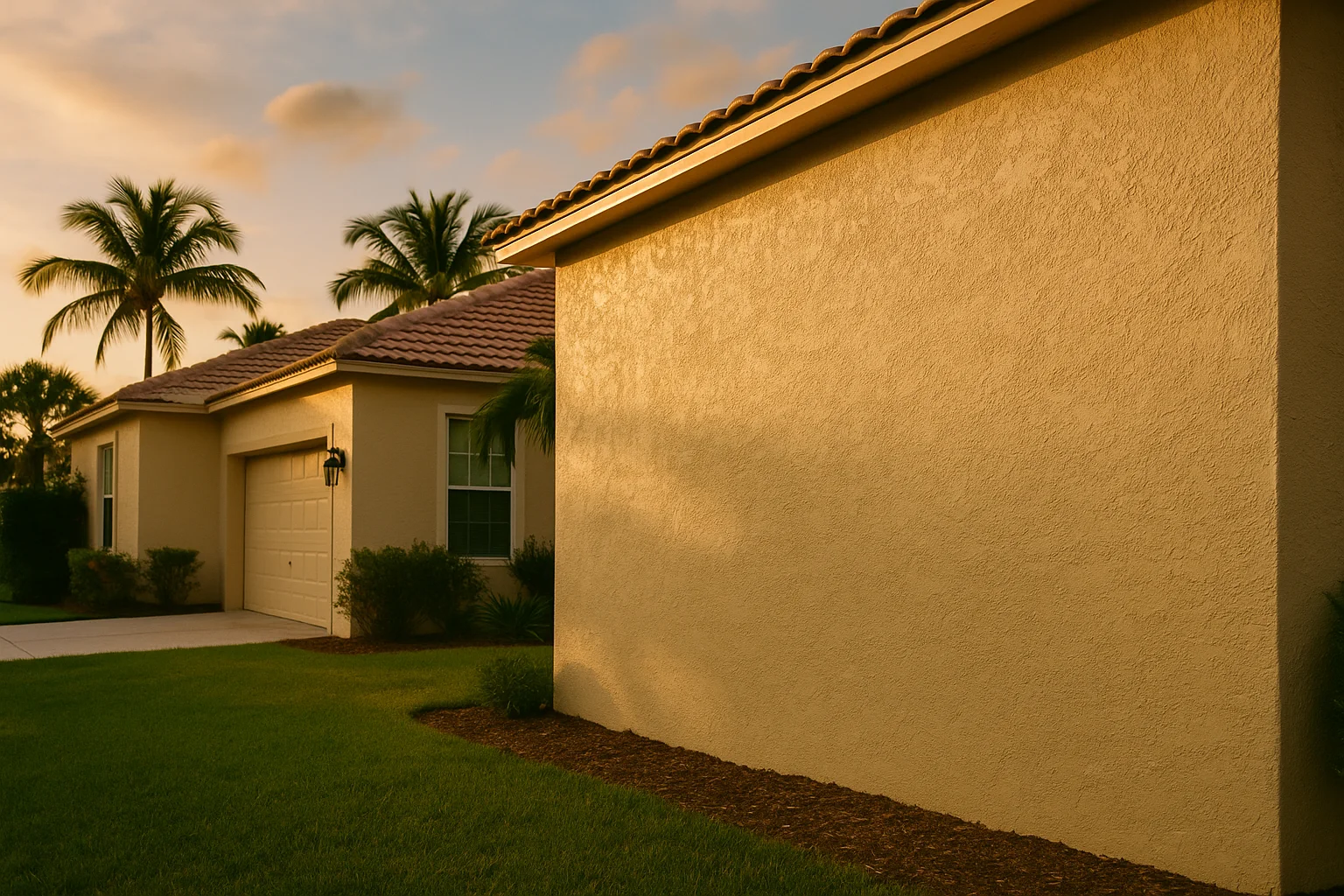
Sixty-year-old stucco - decades of settlement produce hairline cracking, and decades of repainting produce a chalky, multi-layered surface. Both have to be dealt with before color goes on, or the new coat inherits the old coat's failure.
What We Commonly See During Richmond Heights Estimates
Walkthroughs on inland block homes here tend to turn up a consistent pattern:
- Heavy chalking on south and west elevations - the paint comes off on your hand
- Hairline stucco cracks previously filled with caulk, which flexes and reopens rather than holding
- Mildew streaking on shaded north walls and under deep eaves
- Mineral and rust staining along the lower wall band from years of irrigation spray
- Patched sections from past storm or plumbing repairs that were never primed to match
- Peeling on wood fascia, soffits, and carport posts where moisture got behind the film
A house showing chalk and open cracks needs real preparation before color is even worth discussing. A house that has been kept up may need only a wash and a fresh coat of the same system. We tell you which one you have during the walkthrough, in writing, rather than quoting a single number for both.
What We Specify Inland - and What We Do Not
- •100% acrylic exterior systems with strong UV and colour retention, which is the right answer for most Richmond Heights houses
- •Masonry conditioner or bonding primer over chalked older paint, so the new coat has something to grip
- •Proper patching compound in hairline stucco cracks, not caulk, so the repair does not reopen
- •Mildewcide-additive formulas on shaded and canopy-covered elevations
- •Not marine-grade coatings. Fifteen miles inland you are paying a coastal premium for protection your walls will never use. We say so.
Painting a House That Is Older Than Its Owners
Much of Richmond Heights went up in the 1950s and 1960s, and a good number of homes have stayed in the same family since. That history shows up on the walls as layers - original coats, repaints from several different decades, and repairs made after storms or plumbing work, all sitting on the same elevation and all behaving differently under a roller.
We test adhesion and check moisture before quoting rather than assuming, because on a house like this the difference between a wash-and-coat and a full strip-back is thousands of dollars. See our exterior painting process for how we scope that work.
Best Time of Year to Paint in Richmond Heights
November through April is the reliable window, as it is across South Florida - but inland the reason is slightly different. It is less about wind and more about drying time. Through the wet season, afternoon storms roll in on a near-daily schedule and block walls hold that moisture well past the point where the driveway looks dry. We work summers with moisture meters and early starts, but a dry-season exterior simply gives the coating a better cure. Interior work runs year-round. For a fuller breakdown, see our guide to the best time to paint in Florida.
What Richmond Heights Property Owners Ask Us For Most
- Full exterior repaints on 1950s and 1960s block houses with chalked, decades-old coatings
- Interior refreshes before a sale, a rental turnover, or a family move-in
- Fascia, soffit, and carport repainting where wood has started to peel
- Storefront and office repaints along Coral Reef Drive and the US-1 corridor